

There’s a particular kind of exhaustion that comes from trying to fix your skin. You’ve bought the hyaluronic acid serums, the £8 ones and the £60 ones. You’ve layered toners, essences, and moisturisers in the exact order some influencer prescribed. You’ve drunk the water, changed your pillowcase, eliminated dairy, and still woken up to skin that looks… tired. Dull. Like it’s holding onto dryness no matter how much you throw at it.
Anyone who’s spent time in skincare forums recognises this cycle. The endless product swapping. The before-and-after photos that never quite match yours.
That unsettling realisation that your skin might be “oily but dehydrated“, a contradiction that sends you down another rabbit hole of research.
So when a treatment comes along promising to fix hydration from the inside by injecting it directly where topicals can’t reach, the appeal is obvious. Skin boosters have exploded in popularity for exactly this reason. In Korea,a survey of 235 board-certified dermatologists found that 88% now use polynucleotide injections in their clinics.
But does the science actually support the hype? Or is this another case of marketing outpacing evidence?
What Are Skin Boosters?
The Basics: Injectable Moisturiser
Think of skin boosters as a moisturiser you inject rather than apply. They deliver tiny deposits of hyaluronic acid into the top layers of the skin, intended to replenish hydration and smooth the skin’s surface without changing its structure.
Unlike fillers, which add volume and reshape features, skin boosters focus purely on skin quality. They’re designed to make skin look healthier, more hydrated, more luminous, and more resilient rather than structurally different.
This matters for anyone suspicious of “work done” aesthetics. Skin boosters won’t give you pillow face or duck lips. They address that hard-to-describe concern of simply looking… depleted. The kind of dullness that makes people ask if you’re tired when you’re not.
Skin Boosters vs Dermal Fillers
Both treatments use hyaluronic acid. Both are injected. But that’s where the similarities end.
Dermal fillers are thicker, more viscous gels injected deeply to add volume: plumping lips, lifting cheeks, filling nasolabial folds. They’re structural and used to augment and reshape facial contours. On the other hand, skin boosters are fluid, subtle products designed to enhance the existing dermal structure.
Skin boosters are either non-crosslinked (liquid, thin form of HA) or minimally crosslinked (a viscous, semi-fluid gel), making them much thinner and more spreadable than the highly crosslinked, thick gels used for dermal fillers. They’re injected superficially, directly into or just below the dermis using microdroplet techniques that distribute tiny deposits across the treatment area. The result? Hydration without volume, glow without pillow face.
Popular Skin Booster Brands
The market has fragmented rapidly, though availability depends heavily on where you live. Europe and the UK currently have a much wider array of approved options than the US.
Skinvive by Juvéderm: The only FDA-approved skin booster in the US (approved May 2023) and only hyaluronic acid microdroplet injectable approved by the FDA (specifically for cheek smoothness). In Europe, it is sold as Juvéderm Volite.
Profhilo: The “gold standard” in the UK and Europe. It contains one of the highest concentrations of stabilised hyaluronic acid on the market (64mg in 2ml). It’s thermally bonded rather than chemically crosslinked, allowing it to spread like honey under the skin. Requires just 5 injection points per side of the face using the BAP (Bio Aesthetic Points) technique.
Restylane Skinboosters: Available in Vital and Vital Light formulations, using NASHA (Non-Animal Stabilised Hyaluronic Acid) technology. Well-established track record in Europe.
Teoxane Redensity 1: A “beauty booster” cocktail popular in the UK/EU containing hyaluronic acid mixed with amino acids, antioxidants, and minerals. Recommended for those wanting hydration plus that extra luminosity.
Seventy Hyal 2000: A newer entrant popular in UK clinics, formulated to stimulate collagen production alongside hydration.
Polynucleotides (Ameela, Nucleofill, Pluryal Silk): The newest category. Derived from salmon DNA, these work differently, signalling cells to produce collagen and elastin rather than simply hydrating. Particularly popular for under-eye treatment.
How Skin Boosters Work
The Science: More Than Just Hydration
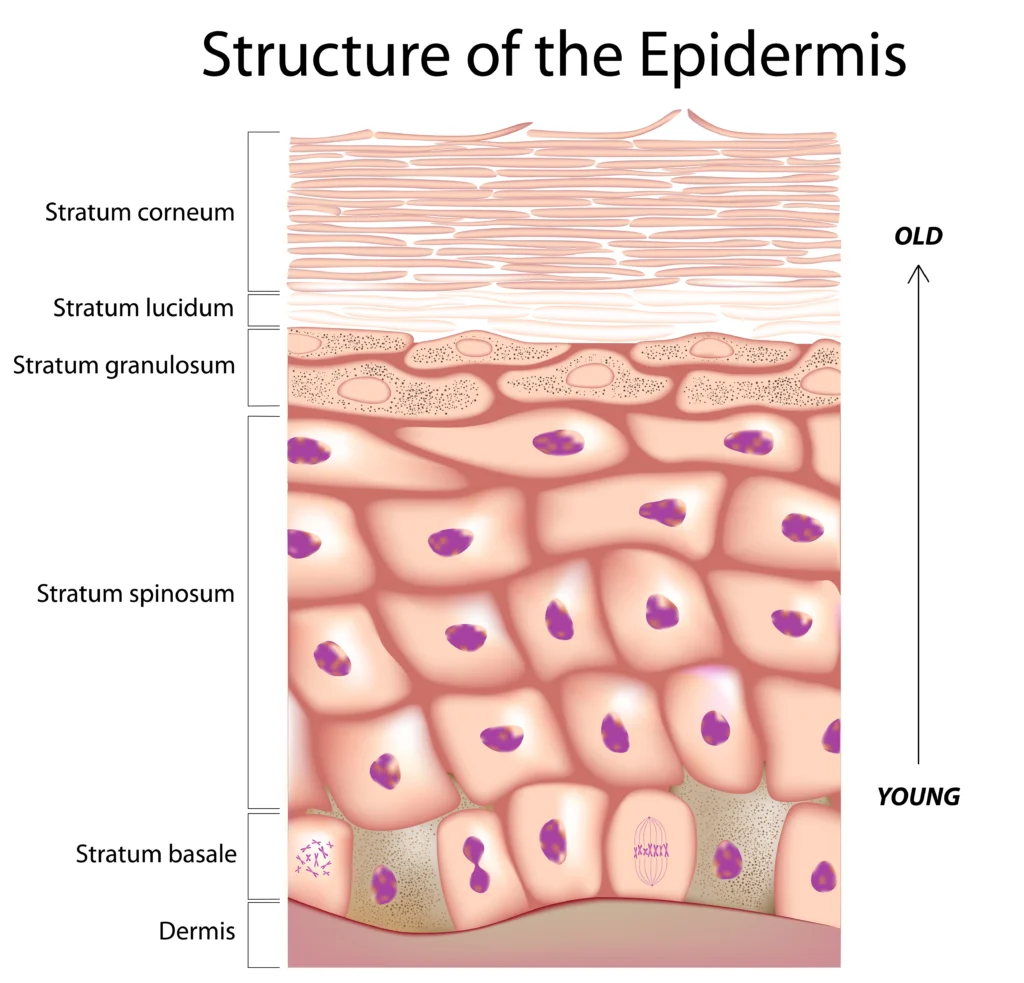
Hyaluronic acid is a molecule your body already produces. It’s found throughout your skin, joints, and eyes, with one remarkable property: it can hold up to 1,000 times its weight in water. As we age, our natural HA levels decline, contributing to that dry, crepey texture that no amount of topical moisturiser seems to fix.
Skin boosters work through multiple mechanisms:
- Immediate hydration: The injected HA acts like a sponge, drawing water molecules from surrounding tissues and locking them in place.
- Fibroblast stimulation: Research shows skin boosters activate fibroblast cells in the papillary dermis, promoting new collagen and elastin formation.
- Collagenase inhibition: They reduce the activity of enzymes that break down collagen, slowing the degradation process.
- ECM fortification: By strengthening the extracellular matrix in the dermal layer, skin boosters improve the skin’s structural integrity over time.
The clinical data supports these mechanisms. A 2024 scientific review examining injectable skin boosters found that hyaluronic acid treatments produced significant improvements in hydration, elasticity, and texture, with effects lasting several months post-treatment.
Key Ingredients: What’s Actually Being Injected
The skin booster category has expanded beyond pure hyaluronic acid:
Hyaluronic acid (HA): The foundational ingredient. Unlike filler HA, skin booster HA is typically non-crosslinked or minimally crosslinked, allowing it to integrate naturally with skin tissue.
Polynucleotides (PN/PDRN): DNA fragments derived from salmon or trout that stimulate cellular regeneration. They have anti-inflammatory properties and can address concerns like dark circles that HA alone cannot.
Amino acids and vitamins: Some formulations (like Teoxane Redensity 1) include additional nutrients to support skin health.
Growth factors and peptides: PRP (platelet-rich plasma) skin boosters use your own blood components to stimulate healing and collagen production.
Where Can Skin Boosters Be Used?
The face is the most popular area, but skin boosters are remarkably versatile:
- Cheeks: The only area FDA-approved for Skinvive, and where most clinical trials have been conducted.
- Neck: Particularly effective for crepey texture and horizontal lines.
- Décolletage: Addresses sun damage and fine lines on the chest.
- Hands: Combats the thin, veiny appearance that often reveals age.
- Under-eyes: Polynucleotides are increasingly used here for dark circles and crepiness, though this requires particular expertise.
- Arms, knees, abdomen: Profhilo Body is specifically formulated for larger body areas with skin laxity.
Benefits of Skin Booster Treatment
Deep Hydration: The Primary Benefit
This is skin boosters’ sweet spot. Unlike topical moisturisers that sit on the surface, skin boosters deliver hydration directly to the dermis—the layer where it actually matters.
The difference is significant. Topicals struggle to penetrate past the stratum corneum (the outermost skin layer). Even the best hyaluronic acid serums work primarily by drawing moisture to the surface. Skin boosters bypass this entirely, depositing HA exactly where dehydrated skin needs it most.
In clinical trials for Skinvive, 58% of treated participants achieved at least a 1-point improvement in cheek smoothness at one month, and patients reported high satisfaction with how glowing, hydrated, and healthy their skin looked through six months.
Softening Fine Lines and Wrinkles
Skin boosters won’t eliminate deep wrinkles—that’s what Botox and fillers are for. But they can visibly soften fine surface lines and improve overall skin texture.
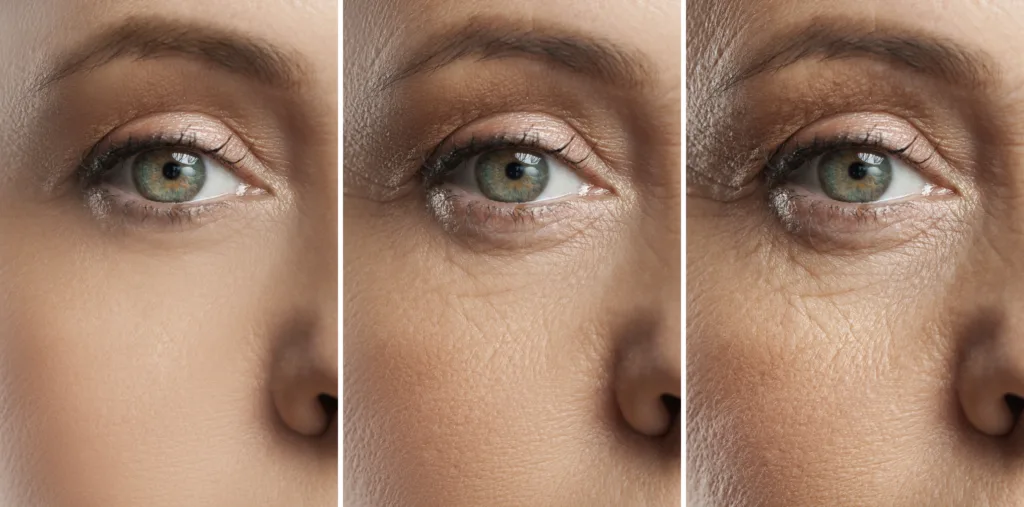
The mechanism is twofold: immediate plumping from the hyaluronic acid, and gradual improvement from collagen stimulation over subsequent weeks. Most patients notice their skin looks firmer and more elastic after treatment, with fine lines appearing less pronounced.
Enhanced Elasticity and Firmness
Beyond hydration, skin boosters stimulate the skin’s natural repair mechanisms. Profhilo, for instance, stimulates four different types of collagen and elastin through the slow release of hyaluronic acid.
Clinical studies on Profhilo Structura show that 95% of patients noticed lasting improvements in the mid-face area after their first treatment, with improvements sustained three months later.
The Skin Booster Procedure
Before Your Appointment
Preparation is straightforward but important:
One week before:
- Avoid blood-thinning medications (aspirin, ibuprofen) if medically appropriate (consult your doctor first)
- Stop supplements that increase bruising risk (vitamin E, fish oil, ginkgo biloba)
- Avoid alcohol for 24-48 hours before treatment
Day of treatment:
- Arrive with clean, makeup-free skin
- Inform your practitioner of any changes in health or medications
What Happens During Treatment
The procedure typically takes 15-30 minutes:
- Consultation: Your practitioner assesses your skin and discusses treatment goals.
- Cleansing: The treatment area is thoroughly cleaned.
- Numbing (optional): Topical anaesthetic cream may be applied for 20-30 minutes. Many skin boosters contain lidocaine, making additional numbing unnecessary for some patients.
- Injection: Using fine needles, the product is deposited in small amounts across the treatment area. Techniques vary by product:
- Profhilo uses 5 specific BAP points per side of face
- Other skin boosters may use microdroplet or linear techniques
- Some practitioners use cannulas for certain areas
- Massage: The practitioner may gently massage the area to distribute the product evenly.
Does It Hurt?
Most patients describe the sensation as mild stinging or pinching, uncomfortable but tolerable. The needles used are very fine, and many products include lidocaine anaesthetic in the formulation.
Areas with thinner skin (under-eyes, neck) tend to be more sensitive. If you’re particularly needle-phobic, request topical numbing cream and communicate with your practitioner throughout.
Aftercare: The First 24-72 Hours
Post-treatment care is minimal but important:
Immediately after:
- Small bumps (like bee stings) at injection sites are normal and typically subside within hours
- Mild redness and swelling may last 24-48 hours
For the first 24 hours:
- Avoid touching or massaging the treated area (unless instructed)
- Skip makeup to reduce infection risk
- Avoid strenuous exercise, saunas, and steam rooms
- Stay out of direct sunlight
For the first week:
- Avoid alcohol (can increase bruising)
- Skip facials, chemical peels, and other treatments
- Avoid swimming pools and hot tubs
Results Timeline: What to Expect
Immediately: Skin may appear slightly plumper due to the water-attracting properties of HA. Some patients describe an instant “glow.”
2-4 weeks: As collagen stimulation kicks in, improvements in texture and firmness become more apparent. This is when most patients see the real results.
4-6 weeks: Optimal results typically visible, especially after completing a full course (usually two treatments four weeks apart).
How Long Do Results Last?
Duration varies by product:
- Profhilo: 6-9 months (some report benefits lasting up to 12 months)
- Skinvive: Up to 6 months (FDA-approved duration)
- Restylane Skinboosters: 6-12 months with maintenance
- Polynucleotides: Results may be more gradual but can last 6-12 months
Safety and Contraindications
Who Benefits Most?
Skin boosters have remarkably universal appeal:
Younger patients (20s-30s) seeking ‘prejuvenation’—preventative maintenance before significant ageing occurs. They want that glass skin glow without waiting for problems to develop.
Middle-aged patients (30s-50s) noticing early signs of ageing: fine lines, loss of elasticity and dull skin. This is considered the sweet spot for skin boosters, where results tend to be most dramatic.
Mature patients (50s-60s+) who love the hydration benefits, particularly post-menopausal women experiencing significant skin dryness. Results may be subtler but still meaningful.
Those with specific concerns: acne scarring, rough texture, crepey skin on the neck or chest, sun-damaged hands.
Skinvive is approved for all Fitzpatrick skin types (I-VI), making it suitable for all skin tones.
Possible Side Effects and Risks
Skin boosters are generally considered very safe, with a strong track record. However, no injection is risk-free.
Common (temporary):
- Redness, swelling, and tenderness at injection sites (resolves within days)
- Minor bruising (typically fades within a week)
- Small bumps or lumps that smooth out as product settles
Rare but serious:
- Allergic reaction (particularly with polynucleotides if you have a fish allergy)
- Infection at injection sites
- Vascular occlusion (extremely rare but possible with any injectable)
- Nodule formation (more common with synthetic polymers like PLLA)
Contraindications (do not proceed if you have):
- Pregnancy or breastfeeding
- Active skin infections, cold sores, or inflammation in the treatment area
- History of severe allergies or anaphylaxis
- Allergy to hyaluronic acid, lidocaine, or (for polynucleotides) fish
- Active autoimmune conditions (consult your doctor)
- Recent Roaccutane use (within 3 months)
Can You Combine Skin Boosters With Other Treatments?
Absolutely, and many practitioners recommend it for comprehensive results.
Same-day combinations:
- Botox in the upper face + skin boosters in the lower face works beautifully
- Fillers and skin boosters can be combined if treating different areas
Wait 2 weeks between:
- Skin boosters and chemical peels
- Skin boosters and microneedling
- Skin boosters and laser treatments
- Profhilo and dermal fillers targeting the same area
How Much Do Skin Boosters Cost?
Pricing varies significantly by product, practitioner, and location:
UK pricing:
- Profhilo: £250-£450 per session (two sessions needed = £500-£900 total course)
- Face + neck: £650-£700
- Face + neck + décolletage: from £950
US pricing:
- Skinvive: Approximately $600-800 per treatment
- Profhilo: Not currently FDA approved in the US (available in Europe/Canada).
Consider the ongoing cost: with maintenance sessions recommended every 3-6 months, budget for 2-4 treatments per year.
The Verdict: Are Skin Boosters Worth It?
Unlike some aesthetics trends that outpace their evidence, skin boosters have solid science behind them. They’re not miracle workers; they won’t replace surgical facelifts or eliminate deep wrinkles but they do something no other treatment quite achieves: improving skin quality at a fundamental level.
For those who’ve exhausted the topical route: the serums, the essences, the elaborate 10-step routines, skin boosters offer a different approach entirely. They bypass the barrier that topicals struggle to penetrate, delivering hydration directly where it’s needed.
The catch? Results depend heavily on practitioner skill and product selection. Always choose a qualified medical professional, and have a thorough consultation about which product suits your specific concerns. This isn’t something to bargain-hunt for.
The most honest assessment? Skin boosters represent a genuine category expansion in aesthetics, not revolutionary, but evolutionary. They fill a gap between topical skincare and structural injectables, offering a middle path for those who want better skin without changing their face.
For anyone who’s stared at their reflection wondering why nothing seems to work, that might be exactly what they’ve been looking for.
FAQ
What are the primary benefits of skin booster treatments?
The main benefits include deep hydration, improved skin texture and elasticity, softening of fine lines, enhanced luminosity, and stimulation of collagen production. Unlike fillers, they improve skin quality without adding volume or changing facial structure.
How often should one undergo skin booster treatments?
Most protocols recommend an initial course of two treatments spaced four weeks apart, followed by maintenance sessions every 3-6 months. Some practitioners suggest one session every three months rather than waiting six months for two.
What are the potential side effects of skin boosters?
Common temporary side effects include redness, swelling, tenderness, and minor bruising at injection sites—typically resolving within days. Rare complications include allergic reactions, infection, and nodule formation. Vascular occlusion is extremely rare but possible with any injectable.
Can individuals with sensitive skin use skin boosters?
Generally yes, as hyaluronic acid is a naturally occurring substance in the body with low allergenic potential. However, those with histories of severe allergies, autoimmune conditions, or specific allergies to HA, lidocaine, or fish (for polynucleotides) should avoid treatment or proceed with caution after thorough consultation.
Which active ingredients are most effective in skin boosters?
Hyaluronic acid remains the gold standard for hydration. Polynucleotides (salmon DNA) are increasingly popular for their regenerative and anti-inflammatory properties, particularly for under-eye treatment. Some formulations add amino acids, vitamins, and growth factors for enhanced benefits.
How do skin boosters differ from traditional moisturisers?
Topical moisturisers work on the skin’s surface, while skin boosters deliver hyaluronic acid directly into the dermis—the deeper layer where hydration actually matters. They also stimulate collagen production, something topical products cannot achieve. Think of it as the difference between watering a plant’s leaves versus its roots.