
Do you know what’s worse than not having a skincare routine? Using the wrong products for your skin type. Like wearing shoes that don’t fit, applying products that don’t suit your skin can lead to breakouts, irritation, or even premature ageing.
That makes understanding your skin type the crucial first step in building an effective and personalised skincare routine. When you align your skincare routine with your skin’s specific needs, you’re not just maintaining its health—you’re optimising its natural ability to protect, repair, and regenerate.
How to Identify Your Skin Type
If you’re unsure of your skin type, you can determine it using these three methods:
- The watch and wait approach starts with washing your face using a gentle cleanser, patting it dry, then waiting 30 minutes without applying products. Observe your skin: shininess suggests oily skin, while tightness points to dry skin. If your skin feels comfortable and looks balanced, it may be normal, but if you notice redness or discomfort, you may have sensitive skin.
- The bare-faced method follows similar steps but focuses on how your skin feels after cleansing. Notice any tight sensations, oiliness, or comfortable balance.
- The blotting sheet technique involves pressing oil-absorbing papers against different areas of your clean face. Hold them to light—heavy oil transfer indicates oily skin, minimal oil suggests dry skin, and mixed results point to combination skin. Normal skin shows little oil across all areas, while sensitive skin might react to the pressure.
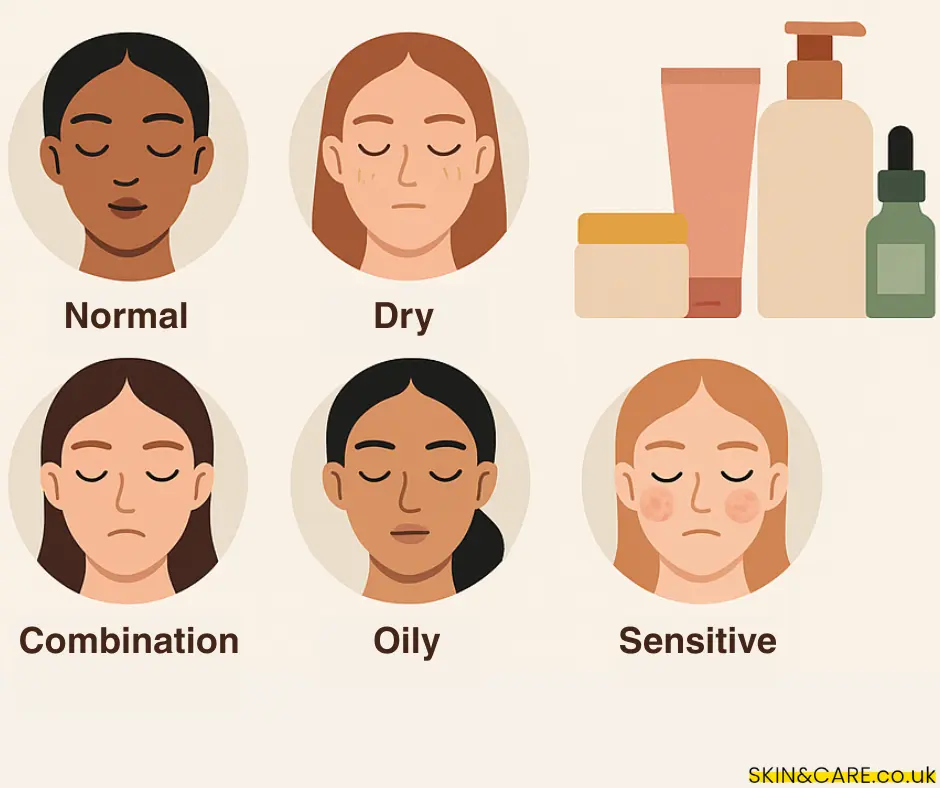
The Five Main Skin Types and Their Unique Needs
Every skin type reacts differently to ingredients, so it’s important to pick products that suit your skin’s needs and skip anything that could irritate.
Oily skin
- Is characterised by excessive sebum production which creates a shiny or greasy appearance throughout the day. You’ll likely notice enlarged pores, especially in the T-zone (forehead, nose, and chin), and a thicker feeling complexion. Oily skin is more prone to blackheads, pimples, and other blemishes, and typically feels the need for frequent face washing. To manage shine and prevent breakouts, you need oil-free, non-comedogenic products. Light, mattifying formulas work best, while heavy creams should be avoided. Regular gentle exfoliation helps control excess oil production. (We’ve got a curated list of effective moisturisers for oily skin you to check)
Dry skin
- Often feels tight, rough, or flaky and may look dull. It can be prone to redness, irritation, and fine lines due to a lack of natural oils and moisture.
Combination skin
- Features both oily and dry areas, commonly with oiliness in the T-zone and dryness on the cheeks. Pore size and shine can vary across the face. For this skin type, apply lightweight moisturisers to oily areas and richer creams to dry patches.
Sensitive skin
- Is easily irritated and may react with redness, burning, itching, or stinging when exposed to certain products or environmental factors. It responds best to fragrance-free, hypoallergenic formulations. (Always test new products on a small area first) .
Normal skin
- Is well-balanced, not too oily or too dry. It typically has a smooth texture, small pores, and few blemishes or sensitivities.Maintain balance with basic, gentle products. Consistent cleansing, moisturising, and sun protection help preserve its healthy appearance.
Key Ingredients to Look For and Avoid
Using products that don’t match your skin type can trigger unwanted reactions—from increased dryness to breakouts and irritation. For instance, applying oily-skin formulations to dry skin might worsen flakiness and discomfort.
When you select products that align with your specific needs, you reduce the risk of adverse reactions while improving the effectiveness of your routine.
Dry Skin Ingredients
For this type of skin, hyaluronic acid and ceramides are top choices. These ingredients boost hydration and help reinforce the skin’s barrier, keeping moisture locked in. Also, look for products with glycerin, as they are also beneficial for preventing dryness.
Oily & Acne-Prone Skin Ingredients
If you have this skin type, look for salicylic acid (a beta hydroxy acid) or niacinamide. These help regulate oil production and minimise breakouts by unclogging pores and reducing shine. Clay-based products also absorb excess oil without over-drying.
Ingredients for Sensitive Skin
With this skin type, it’s best to prioritise gentle, fragrance-free formulas with allantoin, panthenol, or azelaic acid. These ingredients soothe irritation and reduce redness. Avoid harsh exfoliants such as strong acids or scrubs.
What Works for Combination Skin
Combo skin can benefit from balancing actives like niacinamide and lighter hydrators. Lightweight gels containing aloe vera hydrate the skin without heaviness.
What to Avoid

Certain skincare ingredients can upset your skin’s natural balance. While parabens are widely used and considered safe by regulatory bodies, some individuals with sensitive skin prefer to avoid them as they could cause irritation.
If you have dry skin, you should avoid denatured alcohol and harsh sulfates, as these can strip away your skin’s natural moisture, leaving it feeling tight or irritated (additionally, there are other ingredients to avoid if you have dry skin). For oily or acne-prone skin, steer clear of heavy oils and comedogenic ingredients, since these can clog your pores and make breakouts more likely. If your skin is sensitive, it’s best to skip products with added fragrance and strong acids, which can easily trigger redness or discomfort. And if you have combination skin, try to avoid applying rich creams to your T-zone, where you’re already prone to excess oil and shine.
Both natural and artificial fragrances rank among the top causes of skin reactions. If you have sensitive skin, select fragrance-free or hypoallergenic options. Look out for hidden fragrance compounds listed as ‘parfum’ or ‘aroma’ on labels.
How to Build a Skincare Routine
Now that you know the dos and don’ts for each skin type, it’s time to focus on the skin regimen.
Start with three basic products: a gentle cleanser matched to your skin type, a suitable moisturiser, and broad-spectrum sunscreen. Cleanse morning and night, moisturise while skin is slightly damp, and apply sunscreen as the final morning step.
For specific concerns, add targeted treatments gradually. Oily or acne-prone skin benefits from salicylic acid serums, while dry skin responds well to hydrating essences. Those with sensitivity should introduce new products one at a time, waiting two weeks between additions.
Consider adding weekly treatments like clay masks for oily areas or hydrating masks for dry patches. Apply serums after cleansing but before moisturising, and limit active ingredients to one or two per routine to prevent irritation.
Test products on a small area first and monitor your skin’s response over several days.
How to Build a Skincare Routine That Works
Knowing the dos and don’ts for each skin type, it’s time to focus on your skin regimen.
1. Start with the Basics
Every effective skincare routine begins with three essential steps:
- Cleanser: Choose one suited to your skin type (e.g., foaming for oily, cream-based for dry).
- Moisturiser: Keeps your skin hydrated and supports barrier function.
- Sunscreen: A broad-spectrum SPF 30+ protects against premature ageing and sun damage.
AM Tip: Cleanse → Moisturise → Apply sunscreen
PM Tip: Cleanse → Apply treatment (if needed) → Moisturise
2. Introduce Targeted Treatments
Once your basic routine feels comfortable, consider adding:
- Salicylic acid (for oily/acne-prone skin)
- Hyaluronic acid or glycerin (for dry skin)
- Niacinamide or azelaic acid (for sensitive or combination skin)
Introduce one product at a time and give it 2–4 weeks before adding another.
3. Weekly Extras for Long-Term Results
- Clay masks: Great for oil control on the T-zone.
- Hydrating masks: Soothe dry, flaky areas.
- Gentle exfoliation: Once or twice a week to boost cell turnover.
4. How to Layer Skincare Products
Apply from thinnest to thickest:
- Cleanser
- Toner (optional)
- Serum or treatment
- Moisturiser
- Sunscreen (AM only)
Let each layer absorb before moving on to the next.
5. Always Patch Test
To avoid irritation or allergic reactions:
- Apply a small amount of any new product behind your ear or on your jawline.
- Wait 24–48 hours to monitor for redness or itching before full use.
Clean Beauty, Fragrance-Free, and Other Buzzwords—Do They Matter?
We’re often faced with buzzwords like clean, fragrance-free, vegan, and organic. These terms can sound reassuring, but their meanings aren’t always clear-cut or regulated.
For example, clean beauty is not legally defined in the UK, so brands can interpret it differently—sometimes simply to match a marketing trend instead of a guarantee of safety or effectiveness. (Boots has a great article on this).
Many of us wonder, is natural skincare better? Natural does not always mean safer or more effective. Some natural ingredients can cause irritation, while many synthetics are tested for safety and stability. There’s no evidence that all synthetic ingredients are harmful, and some can actually be gentler or more effective for certain skin types.
Fragrance-free is a label worth noting, especially for sensitive skin. If you see ‘Unscented’ on the label, that means no noticeable scent, but it may still contain fragrance chemicals to neutralise other smells. ‘Fragrance-free’ avoids all added fragrance compounds.
FAQ
What are the essential skincare products to start with?
- A gentle cleanser, moisturiser, and sunscreen. These form the foundation of a good routine.
How do I know if a product is irritating my skin?
- Look for signs like redness, stinging, or breakouts. Always patch test before full application.
Can I mix different skincare brands?
- Yes! Just ensure the ingredients work together and avoid layering too many actives at once.
Is natural skincare always safer?
- Not necessarily. Some natural ingredients can be irritating, while many synthetic ingredients are gentle and well-tested.
Should I change my products with the seasons?
- Yes—your skin might need richer hydration in winter and lighter formulas in summer.
How long should I try a product before deciding if it works?
- 4–6 weeks is a good rule of thumb, unless it causes irritation, in which case stop immediately.
Before You Leave
According to the Association of American Dermatology (AAD), by the time you reach 60, dry skin is almost inevitable. That’s why moisturising becomes arguably the most important step in your skincare routine, and knowing what to look for in a moisturiser is just as crucial.
If oily skin is your concern and you’re on the hunt for the right moisturiser, we’ve got just the article for you! Check out our roundup of 10 popular moisturisers for oily skin that hydrate without clogging pores.