
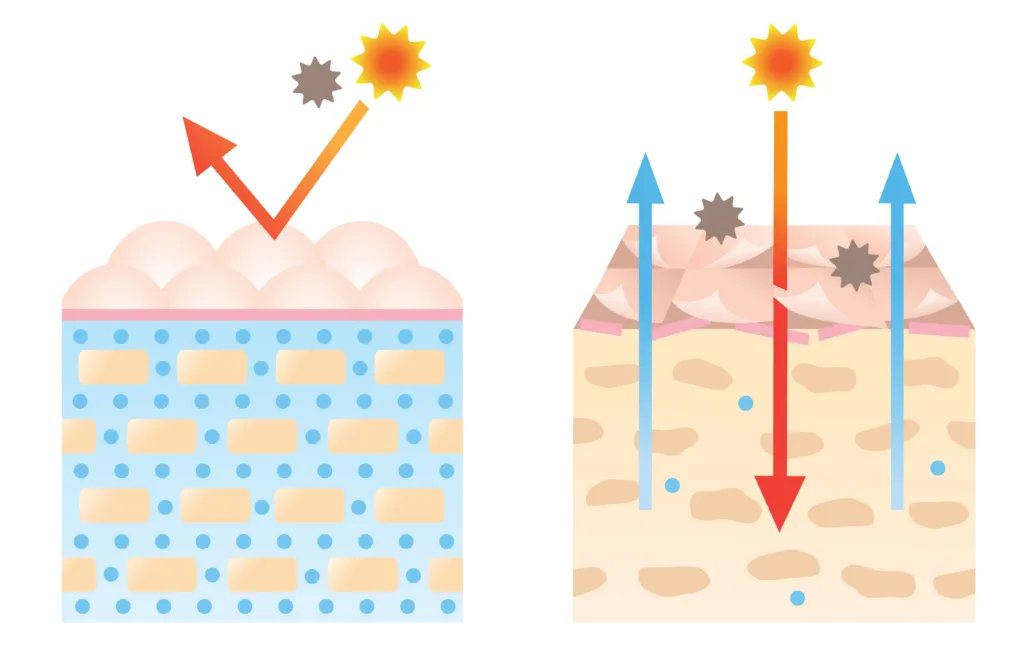
Ceramides are the skincare ingredient most dermatologists agree everyone needs. They make up around half of the lipid content of the skin barrier, hold your barrier together, and decline steadily after age 40. Without adequate ceramides, your skin loses water, becomes sensitised, and ages faster.
But what exactly are ceramides? How do they work? And why do some formulations repair barriers while others just sit on the surface? These are some of the questions we will be answering in today’s article.
Not sure what to buy? See our roundup of the Top Ceramide Moisturisers That Won’t Let You Down.
What Are Ceramides?
Ceramides are lipids (essentially fats) that naturally exist in your skin’s outermost layer (the stratum corneum). They make up roughly 50% of the lipid content in this protective barrier.
Think of your skin barrier as a brick wall: skin cells are the bricks, and ceramides are the mortar holding them together. This “mortar” serves two critical functions:
- Prevents water loss (keeps moisture locked inside)
- Blocks external threats (stops irritants, allergens, and bacteria from penetrating)
When ceramide levels are adequate, this wall stays intact. Water stays in, irritants stay out, and your skin remains hydrated and protected. When ceramide levels drop through ageing, harsh weather, aggressive skincare, or skin conditions like eczema, the mortar crumbles. Gaps form between the “bricks,” water escapes, and irritants penetrate more easily. And as we know, when the skin barrier is disrupted, it may become dry, sensitive, and irritated, which can accelerate ageing and cause it to react to products that never caused problems before.
How Do Ceramides Work?
When you apply ceramides topically in moisturisers or serums, they integrate into your skin’s existing lipid structure. They don’t restart your skin’s natural ceramide production (that’s impossible with topical application), but they supplement what’s missing.
The Barrier Repair Process
Healthy skin barrier:
- Ceramides + cholesterol + fatty acids form organised lipid layers
- These layers create a waterproof seal
- Transepidermal water loss (TEWL) remains low
- Skin stays hydrated, plump, and protected
Compromised barrier:
- Ceramide levels decline (from age, damage, or disease)
- Lipid layers become disorganised and develop gaps
- TEWL increases (water escapes faster)
- Skin becomes dry, irritated, and vulnerable
After topical ceramide application:
- Ceramides from the product fill gaps in the lipid layers
- Barrier organisation improves
- TEWL decreases
- Hydration levels normalise
- Irritant penetration reduces
Clinical and imaging studies show that topically applied ceramides can interact with the stratum corneum lipid matrix and help restore organised lipid structures. However, the delivery system matters: ceramides formulated with cholesterol and fatty acids support more effective barrier repair than ceramides used alone.
Why the 3:1:1 Ratio Matters
Research found that ceramides work best when combined with cholesterol and fatty acids in a 3:1:1 ratio. This ratio mimics the natural composition of healthy skin and allows the lipids to organise into proper lamellar (layered) structures.
Products that contain ceramides alone without cholesterol and fatty acids show less improvement in barrier function than products with all three components together. This is why better formulations list ceramides, cholesterol, and fatty acids near the top of the ingredient list.
Types of Ceramides and Their Function
There are 12 major classes of ceramides found in human skin, but skincare products typically focus on three: Ceramide NP, Ceramide AP, and Ceramide EOP. Each serves a different function in the barrier.
| Ceramide | Role / Function | Key Benefits |
|---|---|---|
| NP (Ceramide 3) | Structural lipid; organizes barrier lipids | Improves barrier integrity, reduces water loss, hydrates skin |
| AP (Ceramide 6) | Regulates cell turnover; supports shedding | Smooths texture, prevents flakiness |
| EOP (Ceramide 1) | “Binding” ceramide; strengthens lipid connections | Reinforces barrier, supports sensitive/compromised skin |
Ceramide NP (Formerly Ceramide 3)
What it does: The most abundant ceramide in healthy skin
Function: Primary structural lipid, helps organise other lipids into layered formations
Clinical backing: Most-studied ceramide type, consistently shows improvement in TEWL and hydration
Ceramide NP is the workhorse. It makes up the largest portion of your skin’s ceramide content and is responsible for maintaining the overall lipid structure. Studies show ceramide NP is significantly depleted in dry skin and eczema.
Most affordable ceramide products (like The Ordinary’s NMF + Ceramides) use NP alone because it’s the most effective single ceramide type.
Ceramide AP (Formerly Ceramide 6)
What it does: Regulates skin cell turnover (supports normal shedding of dead skin cells)
Function: Promotes natural exfoliation, prevents buildup of dead cells
Clinical backing: Shown to improve skin texture and reduce roughness
Ceramide AP assists in the natural desquamation process (shedding of dead skin cells). When AP levels are adequate, your skin sheds evenly and maintains a smooth texture. When depleted, dead cells accumulate, creating rough, flaky patches.
Products targeting texture issues or mature skin often include AP alongside NP.
Ceramide EOP (Formerly Ceramide 1)
What it does: The “binding” ceramide that holds lipid layers together
Function: Contains linoleic acid, creates structural integrity in the barrier
Clinical backing: Critical for maintaining long-term barrier function
Ceramide EOP has a unique molecular structure that allows it to “grab” onto other lipids, essentially acting as structural reinforcement. It’s less abundant than NP but plays a disproportionately important role in barrier strength.
Products containing all three ceramides (NP, AP, and EOP) show superior barrier repair results than single-ceramide formulas.
Phytosphingosine and Sphingosine (Ceramide Precursors)
Some ingredient lists include phytosphingosine or sphingosine instead of (or alongside) ceramides. These are ceramide precursors, building blocks your skin uses to create ceramides naturally.
The theory is that precursors may stimulate your skin’s own ceramide production rather than just supplementing from the outside. However, clinical evidence for precursors is less robust than for ceramides themselves.
Products with both ceramides and precursors offer a two-fold benefit: immediate supplementation plus potential stimulation of natural production.
How Do Ceramides Benefit the Skin
Clinical research shows ceramides provide multiple benefits across different skin types and concerns:
1. Strengthens Skin Barrier
The primary function. Studies using measurements of TEWL (transepidermal water loss) consistently show that ceramide application reduces water loss through the skin. Lower TEWL correlates with a stronger, healthier barrier.
A study in Skin Pharmacology and Physiology found that ceramide-containing moisturisers improved barrier function markers within 2-4 weeks of consistent use.
2. Increases Hydration
By reducing TEWL, ceramides help skin retain the water it already has. This differs from humectants like hyaluronic acid, which attract water into the skin. Ceramides keep that water from escaping.
Clinical hydration measurements (using corneometry) show significant increases in skin hydration after 4 weeks of ceramide use, with effects persisting even after discontinuing the product.
3. Reduces Sensitivity and Irritation
A compromised barrier allows irritants to penetrate more easily, triggering inflammation. By repairing the barrier, ceramides reduce the penetration of potential irritants and decrease inflammatory responses.
Research published in PMC showed ceramide-containing moisturisers reduced irritation from acne treatments (retinoids, benzoyl peroxide) and improved treatment adherence.
4. Supports Eczema and Dermatitis Management
People with atopic dermatitis (eczema) have significantly lower ceramide levels than those with healthy skin. Multiple studies show ceramide-containing moisturisers improve eczema symptoms, reduce flare-ups, and decrease the need for topical steroids.
A meta-analysis in PMC found ceramide moisturisers significantly improved SCORAD scores (a measure of eczema severity) compared to regular moisturisers.
5. Improves Skin Texture and Appearance
By maintaining adequate hydration and barrier function, ceramides help skin appear plumper, smoother, and more even. This isn’t dramatic anti-ageing (like retinol), but it does create the foundation for healthy-looking skin.
Studies show ceramide use reduces the appearance of fine lines caused by dehydration (though not structural wrinkles caused by collagen loss).
6. Allows Effective Use of Active Ingredients
Ceramides buffer the irritation from potent actives like retinoids, AHAs, and BHAs. This allows you to use these ingredients more consistently and at higher strengths without compromising your barrier.
Research shows ceramide use shortens the adjustment period to retinoids and reduces the likelihood of discontinuing treatment due to irritation.
Who Should Use Ceramides?
For Dry/Mature Skin
Ceramide production declines with age, particularly after 40. This contributes to the dryness, thinness, and increased sensitivity that characterise ageing skin.
Why ceramides help:
- Replace naturally declining levels
- Improve moisture retention
- Reduce irritation from environmental stressors
- Create a foundation for other anti-ageing ingredients to work
Best approach: Rich cream formulations with multiple ceramide types, used morning and night.
For Oily/Acne-Prone Skin
Oily skin often has a compromised barrier despite producing excess sebum. Harsh acne treatments (benzoyl peroxide, salicylic acid, retinoids) further damage the barrier, creating a cycle of irritation and breakouts.
Why ceramides help:
- Repair barrier damage from acne treatments
- Reduce transepidermal water loss that triggers compensatory oil production
- Decrease inflammation that contributes to acne
- Allow consistent use of acne treatments without irritation
Best approach: Lightweight, oil-free gel or lotion formulations with niacinamide.
For Sensitive/Eczema-Prone Skin
Sensitive skin and eczema are fundamentally barrier disorders. Ceramide levels are measurably lower in people with these conditions.
Why ceramides help:
- Restore depleted ceramide levels
- Strengthen barrier against allergens and irritants
- Reduce inflammation and reactive responses
- Decrease reliance on topical steroids
Best approach: Fragrance-free, minimal-ingredient formulations tested on compromised skin.
For Retinol/Acid Users
Retinoids, AHAs, and BHAs temporarily compromise the barrier as part of their mechanism. This leads to the infamous “retinol uglies”—flaking, redness, and sensitivity during the adjustment phase.
Why ceramides help:
- Maintain barrier integrity during active ingredient use
- Reduce irritation without diminishing efficacy
- Shorten the adjustment period
- Allow higher concentrations or more frequent use
Best approach: Apply a ceramide moisturiser after actives (not before, as it dilutes them).
How to Use Ceramide Moisturisers

Application Order
Morning Routine
- Cleanse
- Toner/essence (if using)
- Serums (vitamin C, niacinamide, etc.)
- Ceramide moisturiser
- Sunscreen
Evening Routine
- Cleanse
- Toner/essence (if using)
- Treatment products (retinol, acids)
- Wait 10-15 minutes
- Ceramide moisturiser
Layering with Other Products
Ceramides work with everything. They don’t interfere with actives and actually improve tolerance to potentially irritating ingredients.
Apply ceramides AFTER:
- Retinoids (to buffer irritation)
- AHAs/BHAs (to repair barrier damage)
- Vitamin C (no interaction issues)
- Niacinamide (complementary benefits)
Apply BEFORE:
- Sunscreen (in morning routine)
- Facial oils (if using as final occlusive layer)
Frequency
Ceramides are safe for twice-daily use. Morning application protects against environmental stressors throughout the day. Evening application supports overnight barrier repair.
Amount Needed
Face only: Pea-sized amount (or 1-2 pumps) Face and neck: Slightly larger than pea-sized Face, neck, and décolletage: Two pea-sized amounts
Using more product doesn’t increase benefits, as your skin can only absorb so much. Excess product just sits on the surface.
Ceramides vs Other Ingredients
Ceramides vs Hyaluronic Acid
Hyaluronic acid: A Humectant that attracts water into the skin
Ceramides: Lipids that prevent water loss from skin
Their functions are complementary, not competitors, with HA pulling water in and ceramides keeping it from escaping.
To use both, layer hyaluronic acid (on damp skin) first, then seal it in with a ceramide moisturiser. This gives you hydration and barrier protection.
Most effective ceramide products already include HA, eliminating the need for separate products.
Ceramides vs Niacinamide
Niacinamide: Vitamin B3 that regulates oil, reduces inflammation, and improves texture
Ceramides: Lipids that repair and maintain barrier function
Niacinamide and ceramides work synergistically. Research shows niacinamide can actually boost your skin’s natural ceramide production, while topical ceramides provide immediate supplementation.
Products containing both offer dual benefits: barrier repair from ceramides and oil control, plus anti-inflammatory effects from niacinamide.
Ceramides vs Peptides
Peptides: Amino acid chains that signal cellular processes (collagen production, repair)
Ceramides: Structural lipids that maintain barrier integrity
These target different skin layers and mechanisms. Peptides work on cellular signalling in deeper layers, while ceramides work on structural integrity in the outermost layer.
Combined formulas address both anti-ageing signalling and barrier maintenance.
FAQ
What depletes ceramides in skin?
Several factors reduce natural ceramide levels:
- Age: Production declines steadily after 40
- UV exposure: Degrades existing ceramides and impairs production
- Harsh cleansing: Strips ceramides from the skin surface
- Low humidity: Increases TEWL, depleting ceramides faster
- Skin conditions: Eczema, psoriasis, and dermatitis involve ceramide dysfunction
- Over-exfoliation: Removes ceramides faster than the skin replaces them
- Genetic factors: Some people naturally produce fewer ceramides
Can you use too many ceramides?
No. Ceramides are non-irritating and won’t cause problems from overuse. Your skin will simply absorb what it needs and leave excess on the surface.
However, using multiple heavy ceramide creams simultaneously might feel greasy or cause pilling under sunscreen or makeup. This is more of a cosmetic issue rather than a safety one.
Natural vs synthetic ceramides—which is better?
Natural ceramides are extracted from plants or animals. They’re identical to human ceramides but can vary in purity and may contain contaminants.
Synthetic ceramides are laboratory-created to be bio-identical to human ceramides. They’re more stable, consistent, and typically have fewer impurities.
Clinical evidence doesn’t show significant differences in effectiveness between natural and synthetic ceramides when formulated properly. Both integrate into your skin’s lipid structure and provide barrier repair benefits.
The main consideration is sourcing and stability. Synthetic ceramides offer more consistent quality control.
Do ceramides work for ageing?
Ceramides address specific ageing concerns but aren’t comprehensive anti-ageing treatments.
What ceramides do for ageing:
- Improve moisture retention (reduces dehydration lines)
- Strengthen thinning barriers (common in mature skin)
- Create a foundation for other anti-ageing ingredients to work
- Improve skin texture and plumpness
What ceramides don’t do:
- Stimulate collagen production
- Reverse structural wrinkles
- Lighten hyperpigmentation
- Provide antioxidant protection
For comprehensive anti-ageing, combine ceramides (for barrier support) with retinoids (for collagen stimulation), antioxidants (for protection), and sun protection.
Can ceramides replace retinol?
No. They serve completely different functions:
Retinol stimulates cellular turnover, boosts collagen, treats acne, reverses photoaging, while ceramides maintain barrier integrity, prevent water loss, and reduce sensitivity.
Think of retinol as the active treatment and ceramides as the supporting infrastructure. You use retinol to create visible change; you use ceramides to ensure your skin can tolerate that change without barrier damage.
The most effective approach is to use both retinol for anti-ageing and ceramides to buffer irritation and maintain barrier health.