

Scroll through skincare TikTok long enough and you’ll eventually encounter someone rubbing rendered beef fat on their face, proclaiming it cured their acne, reversed their wrinkles, and changed their life. The comments overflow with converts sharing their own transformation stories. The before-and-afters look genuinely impressive.
But spend five minutes on a dermatology forum, and you’ll find an entirely different conversation, one filled with warnings about clogged pores, bacterial contamination, and fatty acid profiles that work against certain skin types.
So what’s actually going on here? Is tallow a forgotten ancestral secret that Big Skincare doesn’t want you to know about, or is it another wellness trend that’s outpaced its evidence?
We dug into the research, and the findings are surprising.
Table of Contents
Key Takeaways
- Tallow is high in oleic acid (~40-50%) and low in linoleic acid (~3-4%) — the opposite of what acne-prone skin needs. People with breakouts typically have too much oleic acid already.
- It works best for dry, mature, and eczema-prone skin — where heavy occlusion is actually helpful, not harmful.
- The “matches human sebum” claim is misleading — matching sebum composition isn’t automatically good, especially if your sebum is already imbalanced.
- Vitamin claims are overblown — tallow contains vitamins A, D, E, and K, but not in meaningful amounts. It’s definitely not comparable to retinol.
- Grass-fed sourcing genuinely matters — omega ratios and CLA content are significantly better than grain-fed.
- The acne cycle is 8 weeks — initial improvements may mask underlying congestion. Breakouts often appear 3-6 weeks into use.
- The market is unregulated — quality varies wildly. A meaty smell means poor rendering.
- Better alternatives exist for most skin types — high-linoleic oils (rosehip, grapeseed, hemp) for oily skin; balanced oils (argan) for normal skin; well-researched occlusives (squalane, shea) for dry skin.
The Basics: What Is Beef Tallow?
At its core, tallow is simply animal fat that’s been rendered (heated slowly until the fat separates from connective tissue), then purified and cooled into a solid, shelf-stable form. Speaking to Women’s Health, board-certified dermatologist Dr Geeta Yadav described it plainly: “Beef tallow is rendered beef fat, or beef fat that has been slowly melted to be purified.”
The best quality comes from suet, the hard fat surrounding cattle’s kidneys, rather than general trim. At room temperature, it has a creamy, waxy consistency similar to coconut oil or shea butter.
Interestingly, the medical term ‘sebum’ (the oil our skin naturally produces) is literally just the Latin word for ‘tallow.’ Proponents argue this linguistic connection reflects a deeper biological truth: that tallow’s composition mirrors what our skin already makes. There’s some validity to this claim, but as we’ll see, it’s also where the problems begin.
The Trend Explained
Tallow’s resurgence sits at the intersection of several cultural currents: the clean beauty movement’s rejection of synthetic ingredients, growing distrust of mainstream skincare marketing, and a broader “ancestral wellness” philosophy that positions traditional practices as superior to modern alternatives.
In her Women’s Health interview, Dr Yadav attributed the trend to “the convergence of clean beauty with trends we’re seeing on TikTok, like the carnivore diet, as well as a societal shift to scepticism about product and ingredient safety.”
The appeal is understandable. In a market saturated with 30-step routines and ingredients you can’t pronounce, a single-ingredient product rendered the old-fashioned way feels refreshingly honest. When influencers share dramatic results, the temptation to try it yourself is real.
But popularity and efficacy aren’t the same thing. And the science tells a more complicated story than the viral videos suggest.
The Fatty Acid Problem Nobody Talks About

Here’s where we need to get technical, because this is the crucial detail that most tallow content glosses over entirely.
Every facial oil or fat has a specific balance of fatty acids. The two that matter most for skin are oleic acid and linoleic acid. Their ratio determines whether a product is likely to help or harm different skin types.
Tallow’s composition:
- Oleic acid: ~40-50% (HIGH)
- Linoleic acid: ~3-4% (LOW)
Why this matters:
Research published in the Journal of Investigative Dermatology found that people with acne consistently have low levels of linoleic acid in their skin surface lipids. Their skin is already imbalanced toward oleic acid. Applying a product that’s 40-50% oleic and only 3-4% linoleic essentially amplifies an existing problem.
Linoleic acid is crucial for ceramide production, the lipids that actually repair your skin barrier. It’s lightweight, non-comedogenic, and anti-inflammatory. Oleic acid, while excellent for deep hydration, is heavier, more occlusive, and can disrupt barrier function when overused.
A scientific review in Frontiers in Pharmacology states it directly: “High linoleic acid containing botanical oils (i.e., sunflower) are more beneficial to skin health when compared to the high oleic acid counterparts.”
This doesn’t make tallow useless, but it does mean its fatty acid profile suits a specific skin type, not everyone.
What the Research Actually Shows
A 2024 scoping review published in the journal Cureus examined the available evidence on tallow and skin. The findings were mixed:
What appears supported:
- It functions as an effective occlusive, reducing transepidermal water loss
- Early studies suggest potential benefits for atopic dermatitis and psoriasis (conditions characterised by extreme dryness)
What remains unproven:
- Anti-ageing claims
- Acne treatment
- Superiority to established moisturisers
What the researchers emphasised:
- Significant gaps exist in human studies
- Most evidence lacks controlled variables
- More research is needed before clinical recommendations can be made
The review’s authors specifically called for “randomised controlled trials, cross-sectional studies, and qualitative studies” before tallow can be considered evidence-based skincare.
The Vitamin Claims
Tallow does contain fat-soluble vitamins A, D, E, and K. This is technically true and frequently cited by proponents.
However, independent testing suggests these levels—while present—aren’t dramatically high. And the claim that tallow’s vitamin A works like retinol? In her Women’s Health interview, Dr Yadav was unequivocal: “I have not seen any reliable evidence that shows beef tallow is comparable to retinol in any capacity.”
This is a tricky area. The Vitamin A found in animal fat is technically “Retinol” (preformed Vitamin A), unlike the beta-carotene found in plants. So, chemically, tallow does contain retinol. The distinction is concentration and delivery. A retinol serum is formulated to penetrate and cause cell turnover; tallow contains naturally occurring retinol, but at lower, variable concentrations that likely won’t achieve the “anti-ageing” effects of a dedicated serum.
If you’re hoping tallow will deliver retinoid-like anti-ageing benefits, the science doesn’t support that expectation.
Does Grass-Fed Make a Difference?
Yes, and this is one area where the tallow advocates have a point.
Grass-fed tallow has a notably different nutritional profile:
- Omega-3 to omega-6 ratio of 1.4:1 (anti-inflammatory)
- Up to 5x more omega-3 fatty acids
- Double the conjugated linoleic acid (CLA)
Grain-fed tallow’s omega ratio jumps to 16:1, which promotes inflammation rather than reducing it.
If you’re going to use tallow, grass-fed sourcing genuinely matters. But even grass-fed versions maintain that high-oleic, low-linoleic profile that makes tallow problematic for certain skin types.
Who Might Actually Benefit
Dry and Dehydrated Skin
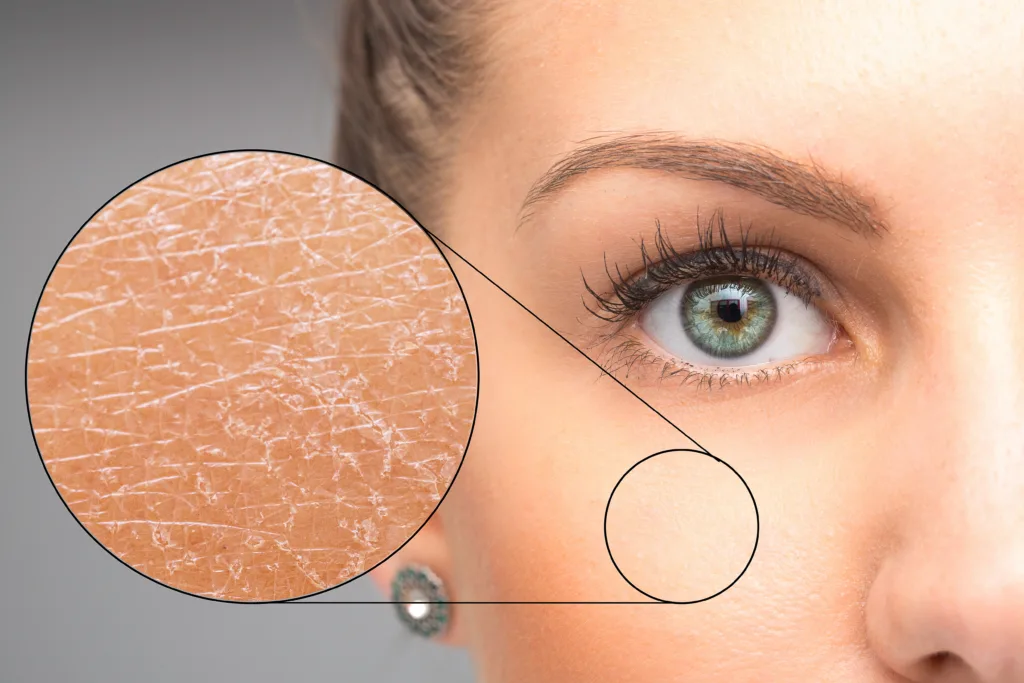
This is tallow’s sweet spot. High-oleic products excel at providing heavy-duty occlusion for skin that’s genuinely parched. If your skin is flaky, tight, or struggling to retain moisture, tallow’s fatty acid profile actually works in your favour.
Mature Skin
Ageing skin tends to produce less sebum naturally, making heavier occlusives more appropriate. The deep hydration oleic acid provides can help address the dryness that comes with thinning skin.
Eczema and Psoriasis
These conditions involve severe barrier dysfunction and moisture loss. The 2024 scoping review noted that tallow-based emulsions showed promise for atopic dermatitis and psoriasis, specifically because heavy occlusion helps these conditions.
Speaking to Prevention, board-certified dermatologist Dr Corey Hartman confirmed that “Beef tallow is occlusive and can help moisturise the skin and help protect the skin barrier.”
Who Should Probably Avoid It
Oily and Acne-Prone Skin
In his Prevention interview, Dr Hartman was direct: “Anyone with oily skin and acne-prone skin should stay away from beef tallow.”
The reasoning goes beyond simple pore-clogging. Acne-prone skin typically has excess oleic acid and insufficient linoleic acid already. Adding a high-oleic product compounds the imbalance.
Particularly concerning: the acne cycle runs approximately eight weeks. Initial results might look promising while underlying congestion builds. Many people report breakouts appearing 3-6 weeks into tallow use, long after they’d concluded it was working.
Combination Skin
If your T-zone gets oily while your cheeks stay dry, tallow creates a dilemma. You could theoretically apply it only to dry areas, but balanced-ratio oils like argan work across your entire face without requiring this kind of management.
Quality Considerations
The tallow market is essentially unregulated. As Dr Yadav told Women’s Health, “there’s a really low barrier to entry when it comes to starting a beauty brand.” Anyone can render fat, package it attractively, and sell it as premium skincare.
What to look for:
- “100% grass-fed and grass-finished” (not just “grass-fed”)
- Sourced from suet, not general trim fat
- Dry-rendered (preserves more nutrients than wet rendering)
- Minimal ingredient list
- Transparent sourcing information
Speaking to NBC News, board-certified dermatologist Dr Anna Chacon advised: “Do your research and seek out a brand that has good transparency on where they are sourcing their tallow.”
Red flags:
- Strong meaty smell (indicates poor rendering)
- Whipped texture (may introduce bacteria; you’re paying for air)
- Vague sourcing claims
- Added fragrances in products marketed for sensitive skin
How to Use It Properly
If your skin type is suitable and you want to try tallow, warm a small amount in your hands, then gently apply it to clean, slightly damp skin. You can use it as an overnight treatment.
Practical tips:
- A pea-sized amount covers the entire face
- Apply to damp skin for better absorption
- Start with 2-3 times weekly, not daily
- Monitor your skin for at least 8 weeks before drawing conclusions
- Patch test on your inner wrist for 24-48 hours first
Some users find pure tallow too heavy. Blending 3 parts tallow with 2 parts lighter carrier oil (jojoba works well) creates a more manageable texture.
Alternatives Worth Considering
If tallow doesn’t suit your skin type or you’d prefer something with more research behind it, consider these options based on your specific needs:
For Oily/Acne-Prone Skin (High Linoleic Acid)
- Rosehip seed oil (~54% linoleic)
- Grapeseed oil (~70% linoleic)
- Hemp seed oil (~55% linoleic)
- Safflower oil (~75% linoleic)
For Balanced/Normal Skin
- Argan oil (~45% oleic, ~40% linoleic)
- Tamanu oil (~35% oleic, ~35% linoleic)
For Dry/Mature Skin (High Oleic, Well-Researched)
- Squalane
- Shea butter
- Avocado oil
In her Women’s Health interview, Dr Sandy Skotnicki pointed out that “squalane, sunflower seed oil, and virgin coconut oil have been studied—beef tallow has not” to the same degree.
The Verdict
Tallow isn’t a scam, but it’s not a miracle either. It’s a heavy occlusive moisturiser with a specific fatty acid profile that suits dry, dehydrated, and mature skin types.
The viral claims have dramatically outpaced the evidence. Tallow won’t replace retinol, it won’t cure acne (and may worsen it), and its composition actively works against oily and breakout-prone skin types.
For the right person—someone with genuinely dry or mature skin who wants a simple, single-ingredient moisturiser—quality tallow from grass-fed sources may be worth trying. For everyone else, better-researched alternatives exist that are more likely to help and less likely to cause problems.
The most honest assessment: tallow is a niche product that went viral. It works for some people, not for others, and definitely not for the reasons TikTok suggests.
FAQ
Can tallow replace my entire skincare routine?
No. It’s a moisturiser—potentially effective for certain skin types, but it can’t deliver the targeted benefits of retinoids, vitamin C, exfoliating acids, or SPF. Think of it as one possible product, not a complete routine.
Why do some acne sufferers say tallow cleared their skin?
Individual responses vary. Some acne stems from dehydration or barrier damage, where heavy occlusion genuinely helps. But acne driven by excess sebum or clogged pores will likely worsen with high-oleic products. The 8-week acne cycle also means early “improvements” may not tell the full story.
How do I know if tallow is causing problems?
Watch for increased blackheads, whiteheads, or inflammatory acne—especially appearing 3-8 weeks after starting use. If your skin looks better initially but then deteriorates, tallow’s delayed comedogenic effects may be responsible.
What about the smell?
Well-rendered suet tallow should smell neutral or slightly nutty. A meaty or rancid smell indicates poor quality; don’t use it on your face.
Is homemade tallow safe?
Experts advise caution. Home rendering lacks quality control, and improper processing can introduce bacteria or fail to remove impurities. If you DIY, maintain strict hygiene, but purchasing products from transparent brands is generally safer.
How should I store tallow?
Airtight container, cool dark place, 6-12 months at room temperature or up to 24 months refrigerated. Discard if you notice colour changes, off smells, or texture changes.